overview
At Klean Bharat, we recognize that wastewater management is one of the most critical challenges of modern times. Rapid industrial growth, expanding urban populations, and increasing water scarcity demand sustainable solutions that not only treat wastewater effectively but also enable its safe reuse. Our Wastewater & Sewage Treatment solutions are designed to address these challenges with a focus on innovation, efficiency, and environmental responsibility.
We deliver end-to-end treatment systems that ensure wastewater is transformed from a liability into a valuable resource.
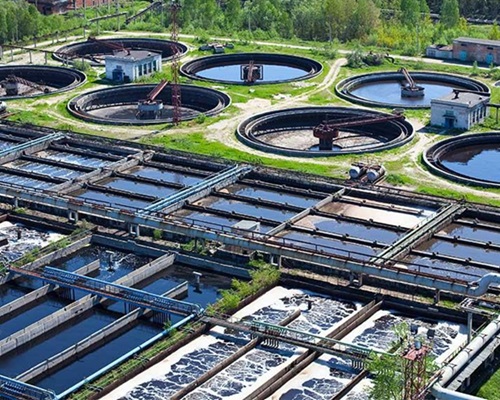
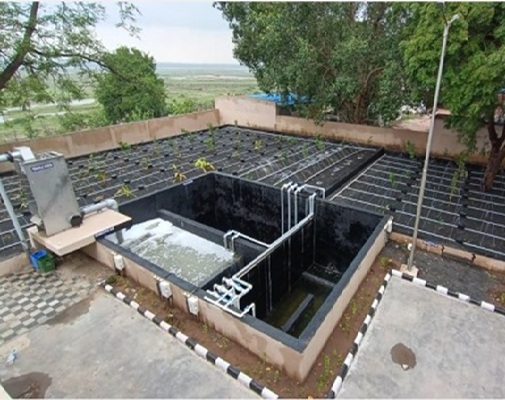
we provide end-to-end wastewater treatment solutions that cater to both urban and industrial needs. Our expertise in Sewage Treatment Plants (STPs), Effluent Treatment Plants (ETPs), and Zero Liquid Discharge (ZLD) systems ensures that water is treated, recovered, and reused in the most sustainable manner possible.
🚰 Sewage Treatment Plants (STP)
Sewage treatment is a wastewater treatment process to remove contaminants from wastewater to produce an effluent that is suitable for discharge to the surrounding environment or it can be reuse in various application, thereby preventing water pollution from raw sewage discharges.
Sewage treatment can be done in three phases:
1) Preliminary (screening & grit removal) for removal of some bulky solids like paper, plastics, sand etc.
2) Primary (Sedimentation) for removal of some light organic matter, and
3) Secondary (Biological treatment) for Bacterial decomposition.
Our STPs are designed to treat municipal and domestic sewage with advanced yet eco-friendly technologies such
- Soil Biotechnology (SBT)
- Sequencing Batch Reactor (SBR)
- Membrane Bioreactor (MBR)
- Moving Bed Biofilm Reactor (MBBR)
🏭 Effluent Treatment Plants (ETPs)
- Effective Recalcitrant COD handling
- Pharmaceutical Effluent (Formulation & API)
- Chemical Research Organizations (CRO’s)
- Ammonia rich effluent: Fertilizer Industries
- Petrochemicals, & Pesticides
- Sugar & Distillery Condensate recycling
- Textile, Dyestuff and Dye intermediates
- MEE condensate treatment for Chemical
Our ETPs are tailored to handle complex industrial wastewater across sectors such as pharmaceuticals, textiles, petrochemicals, agrochemicals, food & beverages, and chemicals.
It can dealt with challenging effluent with organic solvents, non degradable complex molecules, - Organo -N, Organo S , Organo-P molecules, toxic elements such as cyanide. It can handle BOD/COD ratio of less than 5%. Its green and odor free. With advanced biological, chemical, and physical treatment processes, our ETPs ensure safe discharge and enable maximum water reuse.
🌍 Zero Liquid Discharge (ZLD)
Zero-liquid discharge (ZLD) is a water treatment process in which all wastewater is purified and recycled; therefore, leaving zero discharge at the end of the treatment cycle. It ensures that there will be no discharge of industrial wastewater into the environment with zero liquid waste. This ultimate treatment method has zero or nearly zero negative impaction the environment.
There are especially 4 additives that might be very crucial for a structured ZLD process:
1) Pre-Treatment (Biological & physicochemical)
2) Biological Treatment
3) Polishing Treatment
- (RO) Reverse Osmosis (Membrane methods)
- Evaporator and crystallizer (thermal processes)
ZLD includes Polishing/ Tertiary treatment:
- Ultrafiltration
- Reverse osmosis (RO)
- Evaporation/crystallization (MEE/ MVR+ATFD+Spray Dryer)
- Electrodialysis (ED/EDR)
- Forward osmosis (FO)
- Membrane distillation (MD)
- Fractional electrode ionization
- ion exchange

🌿 Our Impact
Through our STP, ETP, and ZLD solutions, we help industries, municipalities, and communities:
Conserve freshwater resources through large-scale reuse
Reduce pollution and protect natural water bodies
Achieve long-term cost savings with low-energy, low-maintenance systems
Support national initiatives like Namami Gange, AMRUT, and Smart Cities
“From treating sewage to eliminating industrial discharge—Klean Bharat ensures a cleaner, greener, and water-secure future.”